
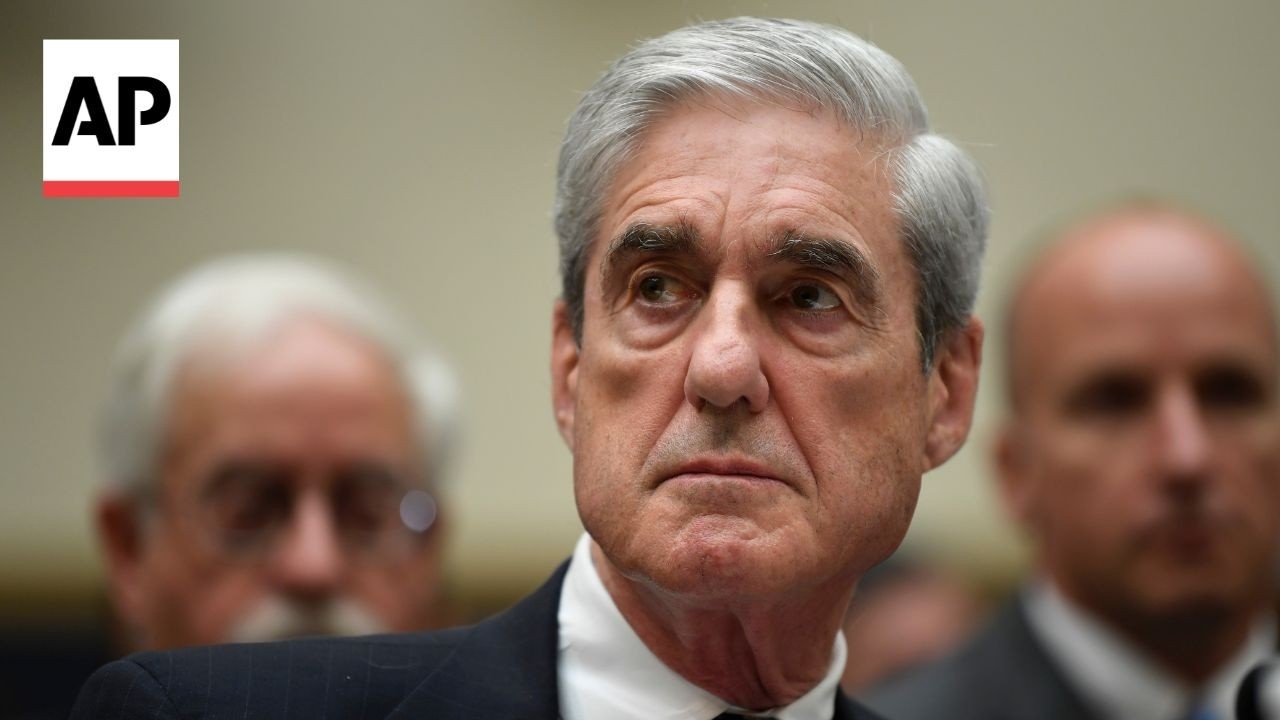
Summary
Robert S. Mueller III, the former Director of the **Federal Bureau of Investigation (F.B.I.)**, has died at the age of 81. During his 12-year tenure, Mueller oversaw the transformation of the F.B.I. into a more proactive and intelligence-driven agency. He also led the **Trump-Russia investigation**, which resulted in the indictment of several high-profile figures, including **Paul Manafort** and **Roger Stone**. Mueller's legacy is complex, with some hailing him as a champion of justice and others criticizing his handling of the Trump investigation. The F.B.I. has undergone significant changes under Mueller's leadership, including the implementation of new **counterterrorism** strategies and the expansion of the agency's **cybercrime** division. Mueller's death has sparked an outpouring of tributes from across the political spectrum, with many praising his dedication to public service and his commitment to upholding the law. For more information on Mueller's life and career, see [[robert-s-mueller-iii|Robert S. Mueller III]] and [[federal-bureau-of-investigation|F.B.I.]]. The impact of Mueller's work can also be seen in the context of [[trump-russia-investigation|Trump-Russia investigation]] and [[counterterrorism|counterterrorism efforts]].
Key Takeaways
- Robert S. Mueller III died at the age of 81
- Mueller served as F.B.I. Director for 12 years
- Mueller led the Trump-Russia investigation
- Mueller's legacy is complex and multifaceted
- Mueller's death has sparked an important conversation about the role of law enforcement in society
Balanced Perspective
Mueller's tenure as F.B.I. Director was marked by significant challenges and controversies, including the **Trump-Russia investigation** and the **September 11 attacks**. While he is widely respected for his integrity and his commitment to public service, his handling of certain high-profile cases has been criticized by some. Ultimately, Mueller's legacy will depend on how his actions and decisions are viewed in the context of history. For more information on the Trump-Russia investigation, see [[trump-russia-investigation|Trump-Russia investigation]]. The impact of Mueller's work can also be seen in the context of [[federal-bureau-of-investigation|F.B.I.]] and [[robert-s-mueller-iii|Robert S. Mueller III]].
Optimistic View
Mueller's leadership and vision helped to transform the F.B.I. into a more effective and proactive agency, better equipped to address the complex threats of the 21st century. His commitment to justice and his dedication to upholding the law have inspired a generation of law enforcement professionals, and his legacy will continue to shape the F.B.I. for years to come. As noted by [[james-comey|James Comey]], Mueller's work has had a lasting impact on the F.B.I. and the broader law enforcement community. For more information on Comey's views on Mueller, see [[james-comey|James Comey]].
Critical View
Mueller's leadership of the F.B.I. was marked by significant failures and controversies, including the **Trump-Russia investigation** and the **F.B.I.'s handling of the **September 11 attacks**. His inability to bring **Donald Trump** to justice and his failure to adequately address the threat of **white supremacist terrorism** have been widely criticized. As noted by [[adam-schiff|Adam Schiff]], Mueller's work has been subject to criticism and controversy. For more information on Schiff's views on Mueller, see [[adam-schiff|Adam Schiff]].
Source
Originally reported by The New York Times